HomeRomeCaravaggio: Light, Violence, and Exile
Caravaggio: Light, Violence, and Exile
Rome · Walking Tour

Caravaggio: Light, Violence, and Exile

3 hrsWalk
2.4 kmDistance
8Stops
21Chapters

About this route

Imagine judging whether Caravaggio’s ferocity was merely destructive or inseparable from his art, from Cardinal del Monte’s protection at Palazzo Madama through the revolutionary Saint Matthew paintings at San Luigi dei Francesi and the fatal violence of Via di Pallacorda to the final masterpieces he left behind before dying at Porto Ercole in July 1610.

🎧 Narrated audio tour⬇️ Works offline🌐 English📍 8 stops
Narrated by
rrawi
English

Stops on the route

8 stops · 21 chapters
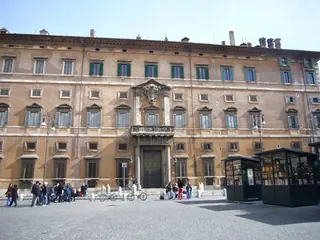
Palazzo Madama
01

Palazzo Madama

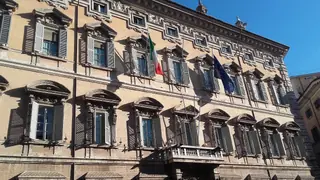
Palazzo Madama is the essential starting point because Cardinal Francesco Maria del Monte’s protection and connections transformed Caravaggio from a struggling…

~10 min here·2 chapters
The Palace That Made Caravaggio's CareerFree chapter

Palazzo Madama's long history as a Medici residence — from humanist center to Baroque showpiece — is the backdrop against which Cardinal del Monte hosted an unknown Lombard painter and changed art history.

0:000:00
How Rome's Patronage System Actually WorkedFree chapter

Elite Roman households like del Monte's weren't just residences — they were nodes in a web connecting art, church power, diplomacy, and money, and an artist without access to that web was effectively invisible.

0:000:00
San Luigi dei Francesi
02

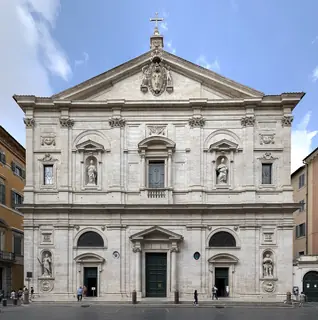
San Luigi dei Francesi

The Contarelli Chapel marks Caravaggio’s public breakthrough, where dramatic light, ordinary models, and uncompromising realism revolutionized the story of…

~45 min here·4 chapters
The Moment Everything Changed for Caravaggio

The Contarelli Chapel commission in 1599 was Caravaggio's first major public religious commission, secured through Cardinal del Monte's intervention, and it transformed him from a protected insider into a publicly recognized artist.

What the Church of France Was Doing in Rome

San Luigi dei Francesi was built over seven decades as the national church of France in Rome, shaped by political upheaval, royal money, and the intervention of some of the most powerful figures of the sixteenth century.

Three Canvases That Rewrote the Rules

Caravaggio's three paintings in the Contarelli Chapel — the Calling, the Martyrdom, and the Inspiration of Saint Matthew — introduced a radical new visual language: extreme light and shadow, ordinary people as sacred figures, and an almost physical sense of drama.

🔓
Unlock 1 more chapters in the app
Get the app
Piazza Navona
03

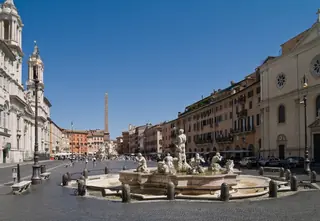
Piazza Navona

Piazza Navona exposes the dangerous life behind Caravaggio’s fame through his 1605 attack on the notary Mariano Pasqualone during a dispute connected with Lena.

~20 min here·4 chapters
The Roman Stadium Beneath Your Feet

Piazza Navona's distinctive elongated shape comes directly from a Roman athletic stadium built by Emperor Domitian around 80–86 AD, whose substructures still survive underground.

How One Pope Remade a Neighbourhood

In the mid-17th century, Pope Innocent X transformed Piazza Navona into a showcase of Baroque power, commissioning the Fountain of the Four Rivers, the church of Sant'Agnese in Agone, and renovating the Pamphilj family palace — all centred on his family's ancestral square.

Bernini's Fountain and a Famous Rivalry

Bernini's Fountain of the Four Rivers, completed 1651, represents four great rivers of the known world and supports an ancient obelisk — and the story of Borromini sabotaging it is a later invention.

🔓
Unlock 1 more chapters in the app
Get the app
Basilica di Sant'Agostino in Campo Marzio
04

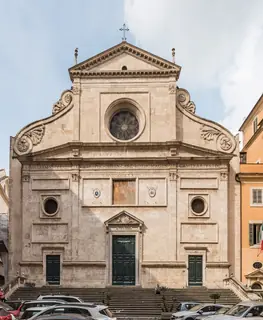
Basilica di Sant'Agostino in Campo Marzio

Caravaggio’s Madonna of the Pilgrims turns Lena, a chipped doorway, and the pilgrims’ dirty feet into a radical vision of sacred life on an ordinary Roman…

~30 min here·2 chapters
Who Is the Woman in the Doorway?

Caravaggio used Maddalena Antognetti — a real Roman woman from his own social world, known as Lena — as the model for the Virgin, grounding a sacred image in contemporary street life.

What Those Dirty Feet Actually Mean

The Madonna of the Pilgrims places the divine encounter in the texture of real poverty — worn clothes, dirty feet, a crumbling doorway — making it one of Caravaggio's most radical statements about who sacred art is for.

Via di Pallacorda
05

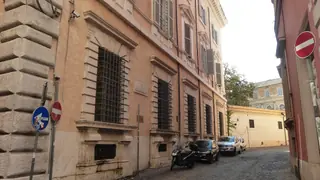
Via di Pallacorda

Via di Pallacorda marks the fatal turning point where Caravaggio killed Ranuccio Tomassoni in 1606, received a death sentence, and began his irreversible…

~10 min here·2 chapters
The Night That Split Caravaggio's Life in Two

On 28 May 1606, a confrontation here left Ranuccio Tomassoni dead and Caravaggio wounded — an event that ended his Roman career and launched four years of fugitive masterwork.

What Actually Started the Fight

The exact motives behind the killing are genuinely contested — money, women, factional politics, and honor all appear in competing reconstructions, and a responsible account separates documented facts from later legend.

Vicolo del Divino Amore
06

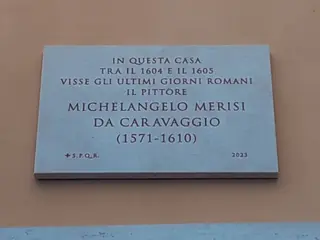
Vicolo del Divino Amore

Caravaggio’s rented home and studio reveals the practical machinery behind his paintings—live models, controlled darkness, overhead light, immense canvases,…

~10 min here·2 chapters
How Caravaggio Engineered His Studio

Caravaggio physically modified his rented space — removing part of a wooden loft — to control the fall of light onto large canvases, and this documented alteration is one of our clearest windows into how he actually worked.

Caravaggio's Relationship With His Landlady

Caravaggio's time here ended in eviction after more than six months of unpaid rent and an accusation that he threw stones at Prudenzia Bruni's windows — a collision between the myth of artistic genius and the unglamorous reality of his finances.

Palazzo Borghese
07

Palazzo Borghese

Palazzo Borghese reveals how Cardinal Scipione Borghese’s influence and appetite for Caravaggio’s paintings became central to the fugitive artist’s desperate…

~5 min here·2 chapters
The Cardinal Who Collected His Way to Power

Cardinal Scipione Borghese was one of the most consequential art collectors in Rome and held the key to Caravaggio's possible pardon.

Caravaggio's Desperate Bid for a Pardon

Caravaggio's final years as a fugitive were shaped by his attempt to trade paintings for a papal pardon brokered through Scipione Borghese.

Basilica di Santa Maria del Popolo
08

Basilica di Santa Maria del Popolo

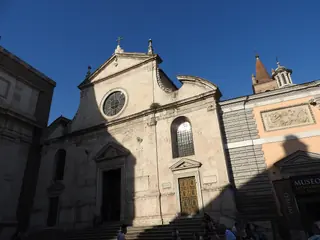
The Cerasi Chapel provides the tour’s essential finale, placing Caravaggio’s dark, physical visions of Saint Paul and Saint Peter beside Annibale Carracci’s…

~35 min here·3 chapters
The Cerasi Chapel and Its Commission

Tiberio Cerasi hired Caravaggio in 1600 to paint the lateral canvases of his private chapel, and the paintings the visitor sees today are second versions — the first pair was rejected and replaced.

What the Two Paintings Actually Do

In the Conversion of Saint Paul, Caravaggio strips the miracle down to a private, inward moment dominated by a horse and a fallen body; in the Crucifixion of Saint Peter, laborers physically strain to raise the cross, making martyrdom feel like manual labor.

Caravaggio Against Carracci — Two Visions, One Chapel

Annibale Carracci's Assumption of the Virgin at the center of the same chapel offers a direct, in-place comparison that shows exactly how different — and how deliberately confrontational — Caravaggio's approach was.

+ 1 more stops in the app

FAQ

How long does this route take?

The audio narration is 45:31 in total. If you pause to look around and take photos, budget 3 hrs. You can pause and resume any time — including the next day.

Is the tour narrated in my language?

This version is narrated in English by rrawi. Other language versions may be available — check the language switcher on this page.

Can I listen without an internet connection?

Yes. This self-guided audio tour works fully offline — download it in the rrawi app before you set off, and GPS automatically triggers the next chapter as you walk. No signal needed.

Do I have to start from the first stop?

No — you can start or jump to any stop in the app. The route works in order, but each stop stands on its own if you need to skip.

What does the free part include?

Different tours offer different free preview chapters depending on the content. Download the rrawi app and subscribe to a City Pass to unlock all 21 chapters and experience the full route.

Ready to walk Rome?

Download rrawi and let rrawi walk with you.

Walk with the app
First chapter at each stop is free
Get the app