HomeRomeBernini versus Borromini: Baroque Rome in Motion
Bernini versus Borromini: Baroque Rome in Motion
Rome · Walking Tour

Bernini versus Borromini: Baroque Rome in Motion

3 hrsWalk
2.5 kmDistance
5Stops
16Chapters

About this route

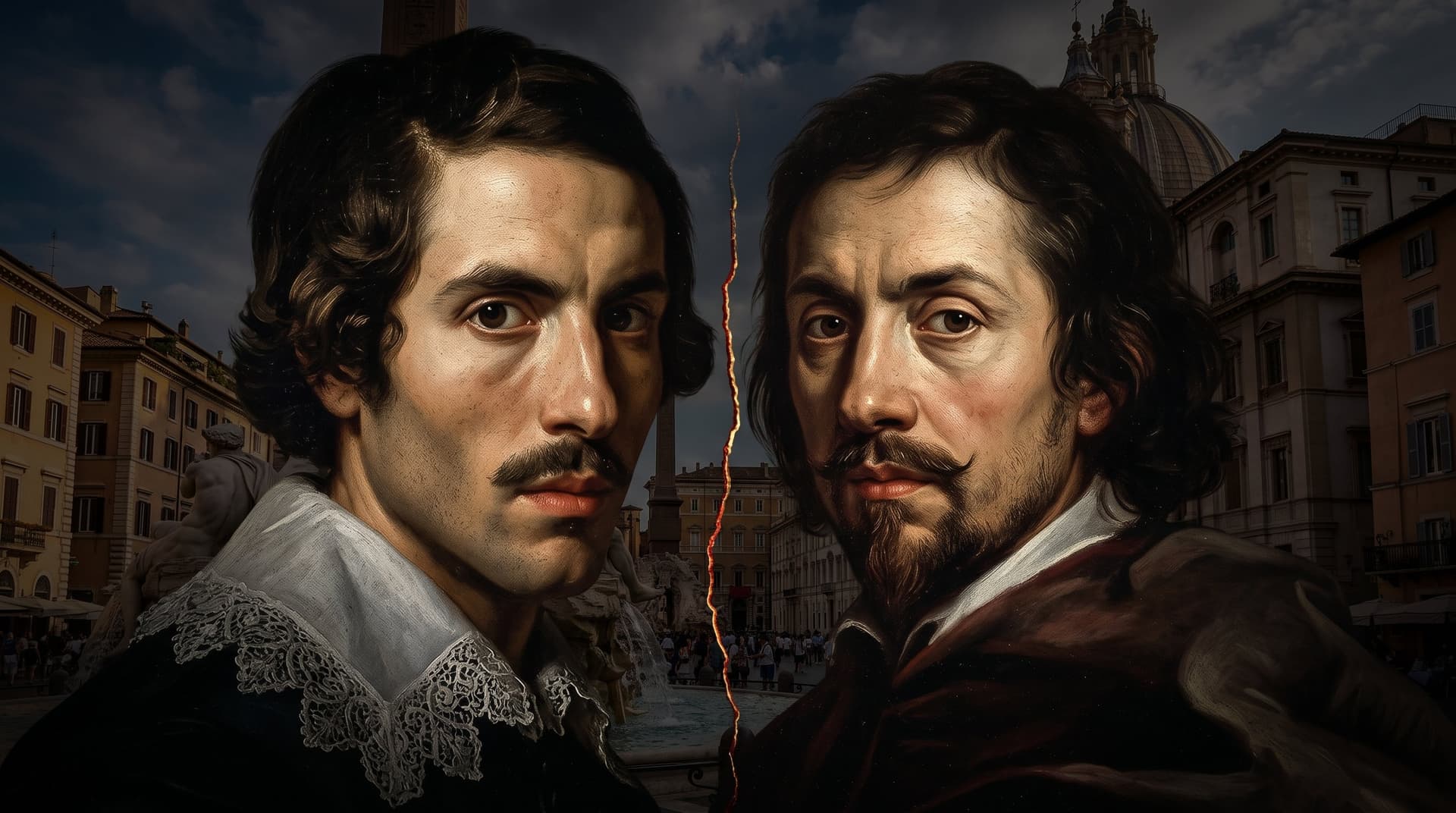
Imagine Rome as a contest over how stone should move you, from Bernini and Borromini facing off in Piazza Navona through the geometry of Sant'Ivo alla Sapienza and the compressed invention of San Carlo alle Quattro Fontane to the moment Bernini's marble Triton turns water, sculpture, and Barberini power into a public performance.

🎧 Narrated audio tour⬇️ Works offline🌐 English📍 5 stops
Narrated by
rrawi
English

Stops on the route

5 stops · 16 chapters
Piazza Navona
01

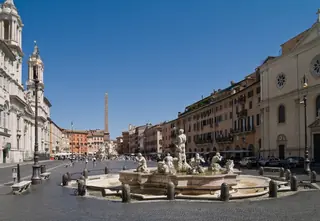
Piazza Navona

Selected as the tour's opening stage, where Bernini's Fountain of the Four Rivers and Borromini's Sant'Agnese in Agone establish the rivalry, personalities,…

~20 min here·4 chapters
The Roman Stadium Beneath Your FeetFree chapter

Piazza Navona's distinctive elongated shape is not an accident of urban planning — it is the direct footprint of a Roman athletic stadium built about 1,940 years ago.

0:000:00
How One Pope Turned a Square Into a Family MonumentFree chapter

Pope Innocent X used Piazza Navona as a vehicle for Pamphilj family prestige, commissioning the fountain, the church, and the palace as a coordinated Baroque ensemble.

0:000:00
Bernini's Fountain and the Myth of the Shielding River God

Bernini's Fountain of the Four Rivers was completed in 1651, before Borromini began redesigning Sant'Agnese — which means the famous story of a river god shielding its eyes from the church is chronologically impossible.
🔓
Unlock 1 more chapters in the app
Get the app
Sant'Ivo alla Sapienza
02

Sant'Ivo alla Sapienza

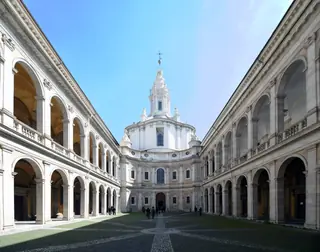
Selected as the key to Borromini's architectural language, with its star-like plan, alternating curves, white interior, and unmistakable spiral lantern.

~20 min here·2 chapters
Two Minds, One Courtyard

The approach through Giacomo della Porta's Renaissance arcade sets up the shock of Borromini's curved church front — a deliberate contrast between two architectural philosophies.

The Dome and the Spiral Lantern

Borromini continued the plan's alternating curves up through the dome and crowned it with a spiral lantern — the whole composition rises as a single unified movement rather than stacking separate architectural layers.

Sant'Andrea al Quirinale
03

Sant'Andrea al Quirinale

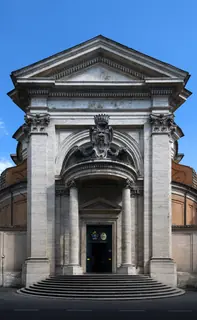
Selected because Bernini's oval plan, colored marble, sculpture, and controlled light provide the clearest dramatic counterpoint to Borromini's geometric…

~35 min here·2 chapters
The Moment Bernini Decided to Prove a Point

Sant'Andrea al Quirinale was Bernini's personal response to the challenge of the oval plan — a direct, conscious counter to what Borromini had done just around the corner.

Saint Andrew's Journey from Canvas to Dome

The theatrical sequence of Saint Andrew's martyrdom — from altar painting up through a sculptural figure rising above the broken pediment toward the dome's light — is Bernini's signature fusion of architecture, sculpture, and painting into one emotional arc.

San Carlo alle Quattro Fontane
04

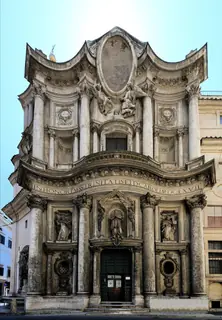
San Carlo alle Quattro Fontane

Selected as Borromini's defining masterpiece, where an exceptionally tight site becomes an undulating façade, oval interior, and intricate geometric dome.

~20 min here·6 chapters
Borromini's First Independent Stage

San Carlo alle Quattro Fontane was Borromini's first independent commission — a tiny, financially constrained corner site that he turned into the defining statement of his entire career.

What Borromini Built Into the Dome

The oval dome of San Carlo contains a precisely interlocking pattern of octagons, crosses, and hexagons that diminish toward a lantern bearing the symbol of the Trinity — geometry doing the work that gold and fresco do elsewhere.

Sixteen Columns and a Moving Wall

The lower interior uses sixteen columns carrying a continuous entablature whose bays shift between cross-shaped, hexagonal, and oval readings — creating the sensation that the walls are in motion without a single curved surface being arbitrary.

🔓
Unlock 3 more chapters in the app
Get the app
Piazza Barberini & Triton Fountain
05

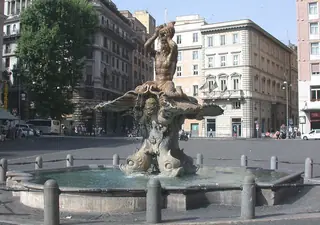
Piazza Barberini & Triton Fountain

Selected because the Triton Fountain reveals how Bernini fused sculpture, water, and Barberini patronage into spectacular urban theater.

~15 min here·2 chapters
Bernini, Urban VIII, and the Patronage Game

Bernini's career was inseparable from the Barberini family — Pope Urban VIII was his most powerful champion, and the Triton Fountain was a direct product of that relationship.

Propaganda in Bronze and Water

The Barberini bees and papal coat of arms embedded in the fountain transformed public art into unmistakable dynastic advertising.

FAQ

How long does this route take?

The audio narration is 28:49 in total. If you pause to look around and take photos, budget 3 hrs. You can pause and resume any time — including the next day.

Is the tour narrated in my language?

This version is narrated in English by rrawi. Other language versions may be available — check the language switcher on this page.

Can I listen without an internet connection?

Yes. This self-guided audio tour works fully offline — download it in the rrawi app before you set off, and GPS automatically triggers the next chapter as you walk. No signal needed.

Do I have to start from the first stop?

No — you can start or jump to any stop in the app. The route works in order, but each stop stands on its own if you need to skip.

What does the free part include?

Different tours offer different free preview chapters depending on the content. Download the rrawi app and subscribe to a City Pass to unlock all 16 chapters and experience the full route.

Ready to walk Rome?

Download rrawi and let rrawi walk with you.

Walk with the app
First chapter at each stop is free
Get the app