HomeFlorenceDante’s Florence: City, Faction, Exile
Dante’s Florence: City, Faction, Exile
Florence · Walking Tour

Dante’s Florence: City, Faction, Exile

5 hrsWalk
1.3 kmDistance
8Stops
35Chapters

About this route

Imagine rebuilding the city that made Dante and then cast him out, from the uncertain memories of Santa Margherita dei Cerchi through guild government at the Torre della Castagna and justice at the Bargello to the political violence of Piazza della Signoria, where a death sentence turned a defeated magistrate into the exiled author of the Divine Comedy.

🎧 Narrated audio tour⬇️ Works offline🌐 English📍 8 stops
Narrated by
rrawi
English

Stops on the route

8 stops · 35 chapters
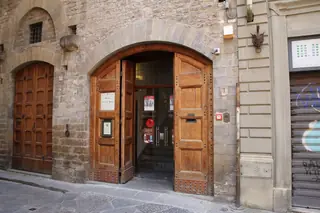
Santa Margherita dei Cerchi
01

Santa Margherita dei Cerchi

Selected as the intimate setting where Beatrice traditions, documented family ties, marriage arrangements, and romantic legend can be carefully distinguished.

~15 min here·5 chapters
The Church Where Two Worlds CollidedFree chapter

Santa Margherita dei Cerchi was the parish church of both the Alighieri and Portinari families, making it the physical intersection of Dante's domestic life and his greatest literary obsession.

0:000:00
What Dante Actually Wrote About BeatriceFree chapter

Dante's account of Beatrice in La Vita Nuova is a literary construction as much as a memoir — precise in emotional detail, elusive about biographical fact — and the gap between his text and verifiable history matters for understanding what this church actually represents.

0:000:00
Folco Portinari, the Father Behind the Legend

Folco Portinari was a powerful Florentine banker and civic benefactor whose real-world prominence — not just his daughter's fame — anchored this church in Florentine life, and Dante honored him in Paradise.
🔓
Unlock 2 more chapters in the app
Get the app
Dante's House & Medieval Quarter
02

Dante's House & Medieval Quarter

Selected to reconstruct Dante’s urban environment through an uncertain birthplace, authentic medieval streets, tower residences, guild membership, and tightly…

~45 min here·3 chapters
What the Crenellated Wall Actually Tells You

The Casa di Dante museum is a 1910 neo-medieval reconstruction, not Dante's actual house — and that gap between legend and stone is the first honest thing to understand about this quarter.

The City That Made Dante, and Broke Him

Dante was born into a Florence convulsed by factional war, into a family of modest Guelph gentry — and the political world of this neighborhood shaped everything he later wrote and suffered.

The Girl in the Crimson Dress

The church of Santa Margherita de' Cerchi, steps from the museum, is where tradition places Dante's first sight of Beatrice Portinari — and the gap between historical evidence and romantic legend here is worth understanding clearly.

Torre della Castagna
03

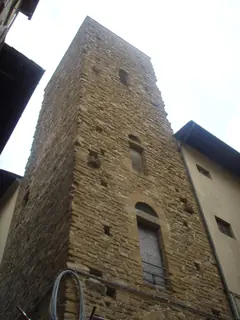
Torre della Castagna

Selected as a surviving monument to guild government, secret voting, political meetings, and the factional republic that Dante served before it turned against…

~10 min here·4 chapters
The Tower With a Strange Name

The Torre della Castagna takes its name from a secret voting practice using chestnuts, revealing how dangerous political life in medieval Florence actually was.

How Merchants Seized the City

The Priorate established in 1282 was a deliberate transfer of supreme power from the old feudal nobility to the merchant and guild classes — the founding act of Florentine republican government.

What the Tower's Architecture Actually Meant

The tower's defensive design was not aesthetic — it was a functional response to the real threat of assassination and mob violence against governing officials.

🔓
Unlock 1 more chapters in the app
Get the app
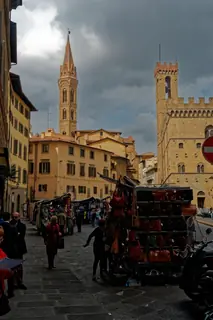
Badia Fiorentina
04

Badia Fiorentina

Selected to reveal how monastic prayer, preaching, and the Badia Fiorentina’s bells regulated both Dante’s religious imagination and the working day of…

~30 min here·5 chapters
Two Men, One Church Doorway

The Badia Fiorentina meant entirely different things to different people who passed through it — to the powerful, it was a monument to dynasty; to a young poet, it was the place where his whole inner life began.

Ugo's Dynastic Bet on the Badia

Ugo of Tuscany and his mother Willa founded and endowed the Badia Fiorentina around 978, making it Florence's premier Benedictine house — and Ugo's patronage was so embedded in civic memory that Dante praised him in Paradise two centuries later.

The Bells That Governed Dante's Day

In medieval Florence, monastic bells were the city's primary timekeeping system — the Badia's tower regulated the rhythm of daily life, commerce, prayer, and labor for the entire surrounding neighborhood, including for Dante himself.

🔓
Unlock 2 more chapters in the app
Get the app
Bargello
05

Bargello

Selected as the fortified center of the podestà’s justice, where civic government, imprisonment, and execution connect Dante’s political service to the…

~2 hrs here·5 chapters
Florence's First Palace of Civic Power

The Bargello was built in 1255 as Florence's first major civic palace — a deliberate symbol of communal law over noble clan warfare — and served as the seat of the Podestà, a foreign magistrate imported precisely because he had no local loyalties.

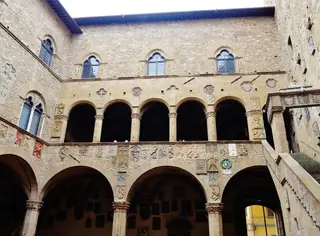
The Courtyard Where Coats of Arms Replaced Blood

The courtyard's walls, covered in the painted coats of arms of past magistrates, were a deliberate visual argument — that office, not family, was the measure of a man's authority in the commune.

Donatello and the Sculpture That Broke Every Rule

Donatello's bronze David, now in the Bargello's first-floor hall, was the first freestanding nude bronze statue created in Europe since antiquity — a work so radical it stunned contemporaries and redefined what sculpture could be.

🔓
Unlock 2 more chapters in the app
Get the app
Orsanmichele
06

Orsanmichele

Selected because its grain stores, guild-funded saints, and sacred marketplace show how food security, commerce, public art, and civic religion met in ordinary…

~45 min here·4 chapters
From Grain Loggia to Sacred Oratory

Orsanmichele began as a practical grain market, not a church, and its dual identity as warehouse and holy site reflects the inseparable connection between commerce and religion in medieval Florence.

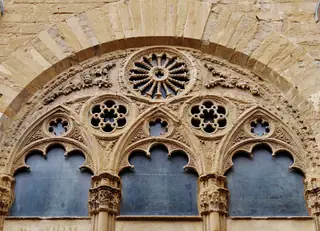
The Black Death and Orcagna's Tabernacle

The Black Death of 1348 transformed Orsanmichele from a grain market into primarily a site of intense religious devotion, expressed through Andrea Orcagna's extraordinary marble tabernacle — one of the most expensive artistic commissions in 14th-century Florence.

The Guild Competition for the Exterior Niches

Florence's major guilds were each assigned one of the fourteen exterior niches and required to fill it with a statue of their patron saint — turning the building's exterior into a fiercely competitive civic art program that drove the greatest sculptors of the age.

🔓
Unlock 1 more chapters in the app
Get the app
Piazza della Signoria
07

Piazza della Signoria

Selected as the stage where factional conflict, political purges, and public punishment produced the Black Guelph victory that drove Dante into permanent exile.

~30 min here·5 chapters
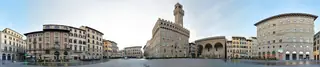
The Square That Expelled Dante

The Piazza della Signoria was the political heart of medieval Florence, built by the Guelph faction to consolidate power, and it was the machinery of government centered here that condemned Dante to permanent exile.

Savonarola's Bonfires and the Piazza's Darkest Hour

The same piazza that expelled Dante later became the stage for Savonarola's theocratic republic — his bonfires of art and books, and ultimately his own execution on this exact pavement.

What Michelangelo's David Meant to This Square

The placement of Michelangelo's David at the entrance to the Palazzo della Signoria in 1504 was a deliberate political act by the Florentine republic, choosing this spot to signal defiance and civic pride.

🔓
Unlock 2 more chapters in the app
Get the app
Ponte Vecchio
08

Ponte Vecchio

Selected to show how commerce, floods, shops, and movement across the Arno shaped the daily city Dante knew and the transformed Florence that followed him.

~20 min here·4 chapters
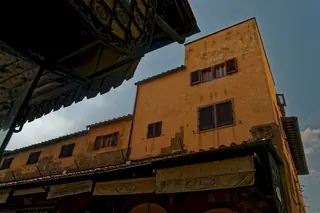
The Bridge Dante Crossed Every Day

The Ponte Vecchio that Dante knew was a Roman-era structure that had stood for centuries before a catastrophic flood swept it away in 1333 — just years after his exile.

How Florence Rebuilt Its Severed Spine

The current Ponte Vecchio was completed in 1345, just twelve years after the flood, with a flatter arch design engineered to resist future flooding — a lesson written in disaster.

The Medici Corridor Above the Shopkeepers

In 1565, Cosimo I de' Medici had Giorgio Vasari build a private elevated passageway over the bridge in just five months, allowing the ruling family to move across the city without touching the street.

🔓
Unlock 1 more chapters in the app
Get the app
+ 1 more stops in the app

FAQ

How long does this route take?

The audio narration is 75:31 in total. If you pause to look around and take photos, budget 5 hrs. You can pause and resume any time — including the next day.

Is the tour narrated in my language?

This version is narrated in English by rrawi. Other language versions may be available — check the language switcher on this page.

Can I listen without an internet connection?

Yes. This self-guided audio tour works fully offline — download it in the rrawi app before you set off, and GPS automatically triggers the next chapter as you walk. No signal needed.

Do I have to start from the first stop?

No — you can start or jump to any stop in the app. The route works in order, but each stop stands on its own if you need to skip.

What does the free part include?

Different tours offer different free preview chapters depending on the content. Download the rrawi app and subscribe to a City Pass to unlock all 35 chapters and experience the full route.

Ready to walk Florence?

Download rrawi and let rrawi walk with you.

Walk with the app
First chapter at each stop is free
Get the app