HomeFlorenceFlorence Cathedral: A City Builds Across Generations
Florence Cathedral: A City Builds Across Generations
Florence · Walking Tour

Florence Cathedral: A City Builds Across Generations

3 hrsWalk
0.5 kmDistance
6Stops
27Chapters

About this route

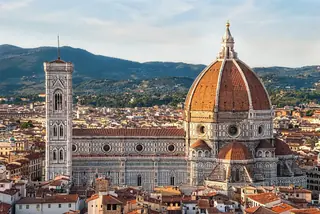
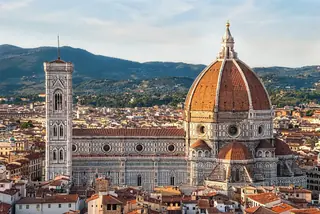
Imagine a city committing itself to a cathedral it cannot yet finish, from the unified civic stage of Piazza del Duomo through the Baptistery’s identity-making rituals and rivalries, upward to Brunelleschi’s self-supporting dome, and finally into the Opera del Duomo Museum, where the same centuries of ambition survive in Ghiberti’s gilded doors and Michelangelo’s hammer-scarred Bandini Pietà.

🎧 Narrated audio tour⬇️ Works offline🌐 English📍 6 stops
Narrated by
rrawi
English

Stops on the route

6 stops · 27 chapters
piazza-del-duomo-and-cathedral-complex
01

piazza-del-duomo-and-cathedral-complex

Piazza del Duomo is the indispensable starting point for seeing how civic competition, religious identity, economic ambition, and coordinated institutions…

~20 min here·5 chapters
The Puzzle Baked Into the PiazzaFree chapter

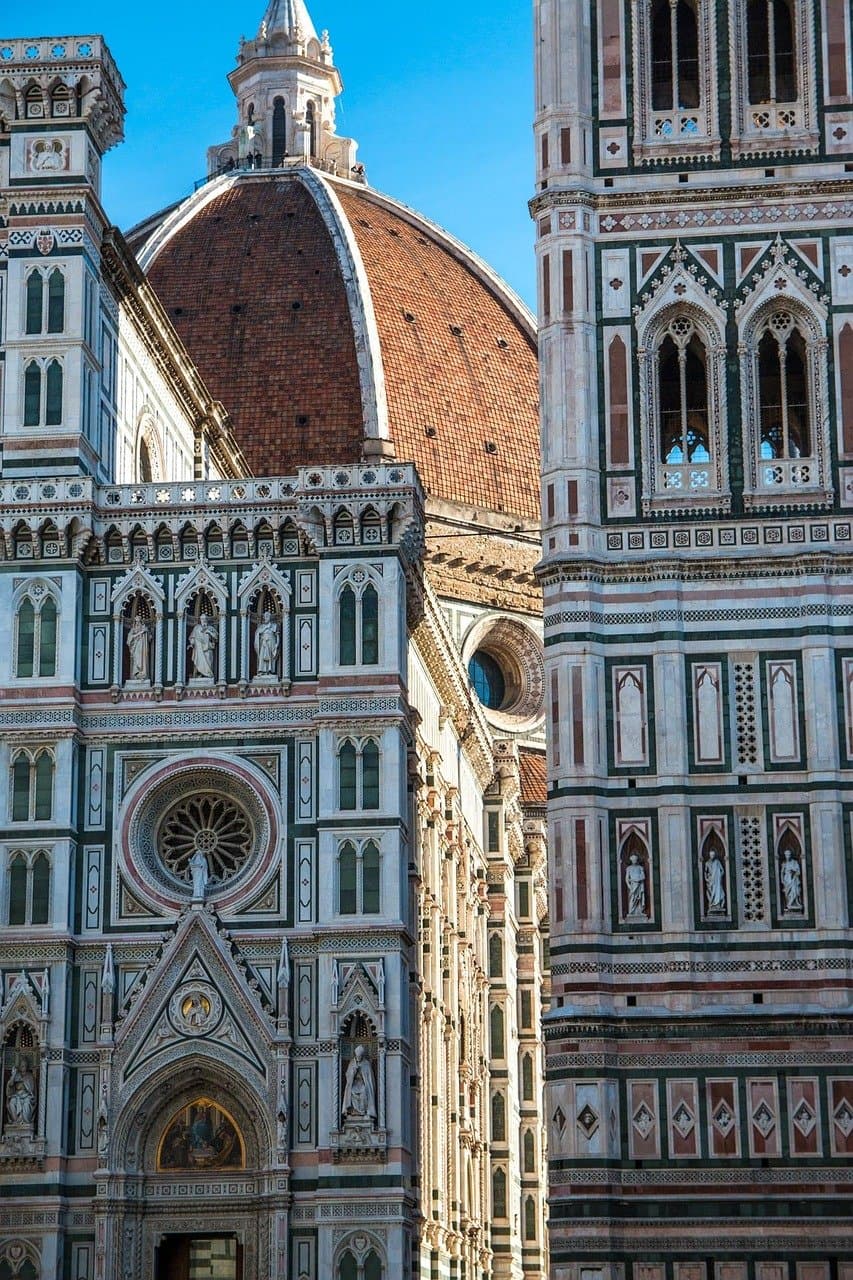
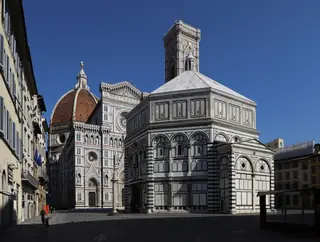
The Cathedral Complex is not a collection of separate monuments but a single multigenerational civic project — one city's 150-year argument with itself about what greatness looks like.

0:000:00
The Painter Who Designed a TowerFree chapter

Giotto di Bondone — the painter who revolutionized Western art — was appointed master of Florence Cathedral in 1334 and immediately began designing the Campanile, whose sculptural program embedded a humanist vision of human achievement into the city's skyline.

0:000:00
The Competition That Launched the Renaissance

The 1401 competition for the Baptistery's bronze doors — won by Lorenzo Ghiberti over Filippo Brunelleschi — is considered one of the founding events of the Renaissance, and Ghiberti spent the next fifty years producing two sets of doors that transformed the art of bronze relief.
🔓
Unlock 2 more chapters in the app
Get the app
Baptistery of San Giovanni
02

Baptistery of San Giovanni

The Baptistery is essential for understanding how baptism, medieval mosaics, guild patronage, and Ghiberti’s bronze doors shaped Florentine identity and…

~10 min here·5 chapters
What the Octagon Meant to Every Florentine

The Baptistery was Florence's most sacred civic building — every citizen passed through it at birth, making it the physical foundation of Florentine identity.

The First Bronze Doors and a Guild's Ambition

The Arte di Calimala — the wool merchants' guild — commissioned the first monumental bronze doors in Italy since antiquity, establishing the Baptistery as a canvas for civic competition.

The Competition That Launched the Renaissance

The 1401 open competition for the North Doors — judged by 34 Florentine citizens — is considered the founding event of the Italian Renaissance, and its two most famous entries sent both finalists in entirely different directions.

🔓
Unlock 2 more chapters in the app
Get the app
Giotto's Bell Tower
03

Giotto's Bell Tower

Giotto’s Bell Tower shows how colored marble, vertical design, sculpture, and successive master builders turned an inherited commission into a coordinated part…

~1 hr here·3 chapters
Two Men, One Tower — Whose Story Is This?

The tower bears Giotto's name but is largely the vision of his successors — a genuine irony built into the structure itself.

The Sculptors Who Kept Building

Andrea Pisano and Francesco Talenti each added their own vision to the tower, creating a layered document of three successive architectural minds.

The Marble Palette and the Civic Statement

The three-color marble scheme wasn't decoration — it was a deliberate visual language tying the bell tower to the cathedral and baptistery as a unified civic ensemble.

florence-cathedral-santa-maria-del-fiore
04

florence-cathedral-santa-maria-del-fiore

The cathedral establishes Arnolfo di Cambio’s immense original ambition and the scale, facade, interior, crossing, and unresolved opening that later…

~20 min here·4 chapters
The Architect Who Promised the Impossible

Florence Cathedral was founded as a deliberate civic statement of ambition, but its original designer left a problem so enormous that the city spent over a century unable to solve it.

The Dome Nobody Knew How to Build

Brunelleschi won the dome commission by promising to build without the traditional wooden centering framework — and then invented an entirely new construction system to make good on that promise.

What the Facade Is Actually Telling You

The cathedral's tricolor marble facade is a 19th-century invention, but it encodes centuries of Florentine civic identity — and preserves the face of the man who started it all.

🔓
Unlock 1 more chapters in the app
Get the app
Brunelleschi's Dome
05

Brunelleschi's Dome

The dome provides the project’s engineering climax, revealing how shells, ribs, chains, herringbone brickwork, machinery, workers, and administrators closed…

~20 min here·5 chapters
The Impossible Promise Florence Made to Itself

Arnolfo di Cambio designed the cathedral's crossing so wide that no one in his era — or for over a century after — knew how to roof it, making the dome a problem deliberately deferred to future generations.

The Competition That Launched a Career

Brunelleschi won the 1418 dome competition not by presenting a finished blueprint but by convincing the Opera del Duomo — the civic board overseeing construction — that he alone understood how to build without the wooden centering frame that the project's sheer scale made impossible.

How Four Million Bricks Held Themselves Up

The dome's double-shell structure, herringbone brickwork, stone chains, and purpose-built hoisting machinery solved the centering problem through a combination of structural geometry and on-site engineering invention.

🔓
Unlock 2 more chapters in the app
Get the app
Opera del Duomo Museum
06

Opera del Duomo Museum

The museum is the essential conclusion because its original sculptures, architectural models, workshop objects, Ghiberti doors, and Michelangelo’s Bandini…

~1 hr here·5 chapters
The Wall That Puts Everything in Context

The museum's reconstructed cathedral facade shows visitors exactly where the original sculptures once lived, making the whole collection legible as a civic program rather than a random gathering of masterpieces.

The Competition That Started the Renaissance

The 1401 Baptistery door competition — won by Ghiberti over Brunelleschi — was the first open artistic competition of its kind in Renaissance Florence, and its outcome shaped the next fifty years of European art.

Two Choir Lofts, Two Visions of the Renaissance

Donatello's and Luca della Robbia's cantorie, displayed facing each other, represent two fundamentally different artistic temperaments working for the same patron at the same moment.

🔓
Unlock 2 more chapters in the app
Get the app

FAQ

How long does this route take?

The audio narration is 61:28 in total. If you pause to look around and take photos, budget 3 hrs. You can pause and resume any time — including the next day.

Is the tour narrated in my language?

This version is narrated in English by rrawi. Other language versions may be available — check the language switcher on this page.

Can I listen without an internet connection?

Yes. This self-guided audio tour works fully offline — download it in the rrawi app before you set off, and GPS automatically triggers the next chapter as you walk. No signal needed.

Do I have to start from the first stop?

No — you can start or jump to any stop in the app. The route works in order, but each stop stands on its own if you need to skip.

What does the free part include?

Different tours offer different free preview chapters depending on the content. Download the rrawi app and subscribe to a City Pass to unlock all 27 chapters and experience the full route.

Ready to walk Florence?

Download rrawi and let rrawi walk with you.

Walk with the app
First chapter at each stop is free
Get the app